


Commercial Roof Ponding Water Solutions in Pelham, AL
For facility managers in Pelham, Alabama, managing commercial real estate is a relentless battle against moisture. Pelham’s humid subtropical climate features hot summers with highs near 90°F, averaging a staggering 56 inches of rain per year and over 119 precipitation days.
This volume of water turns many commercial flat roofs into shallow lakes. While often overlooked, "ponding water"—defined by the National Roofing Contractors Association (NRCA) as water that remains on a roof 48 hours after precipitation—is a compounding structural and financial liability. It threatens your capital budget, occupant comfort, and operational uptime. Understanding the physics and chemistry behind ponding is essential for making informed, high-ROI remediation decisions.
The Physics of Failure: Why Ponding Water Destroys Roofs
Ponding water does not sit harmlessly on a membrane; it actively attacks the building structure, insulation, and the chemical composition of the roof system itself.
Structural Deck Deflection and Dead Load Acceleration
The primary threat is weight. Water is heavy. For every inch of depth, standing water exerts 5.2 pounds of load per square foot.
If drains or scuppers are obstructed, a 20x20 foot area with just two inches of water adds over 4,000 pounds of unanticipated "dead load" to the roof deck. Flat roofs built with lightweight metal decks or wood joists are particularly vulnerable. This immense weight causes the deck to deflect (sag) downward, creating a deeper depression that catches even more water during the next flash storm. It is a vicious cycle that can lead to permanent structural failure of purlins and joists.
Membrane Degradation: Photo-oxidation and Hydrolysis
Water catalyzes chemical reactions that fundamentally break down common roof membranes like TPO, EPDM, and modified bitumen. Standing water acts as a magnifying glass for Pelham’s 209 sunny days, intensifying UV exposure.
Photo-oxidation: This UV intensity, combined with oxygen and standing water, breaks down polymers, causing brittleness, cracking, and chalking.
Hydrolysis: Prolonged moisture exposure leaches plasticizers from the membrane and weakens adhesives at the seams, the most critical point of any roof system.
In high-humidity Pelham, these conditions also invite algae, vegetation, and mosquito breeding, which can further puncture membranes and compromise building hygiene.
Voided Warranties and Hydrostatic Pressure
The vast majority of manufacturer warranties explicitly exclude damage caused by ponding water, often referencing the 48-hour rule. If a leak occurs in a ponding area, the facility owner is financially responsible. Furthermore, pooled water exerts hydrostatic pressure—forcing water through even microscopic flaws in membrane seams, unsealed penetrations, or cracked flashings that would otherwise resist a simple rain event.
Our Comprehensive Step-by-Step Remediation Process
Addressing ponding water is an engineering challenge, not a dynamic repair job. Our proven process, tailored for the Pelham climate, corrects the underlying hydrology of the roof deck.
Laser Topographic Mapping: We begin with a laser-level survey of the roof deck to map the exact high and low points, identifying deflection zones and drainage bottlenecks.
Infrared Moisture Scanning: We utilize infrared thermography to identify saturated polyiso insulation. Wet insulation loses its R-value, increases HVAC loads, and must be removed before any restoration.
Drainage Path Re-Engineering: We assess primary and overflow drains. Solutions may include installing additional scuppers, lowering existing drain rings, or cleaning sediment that causes clogging.
Tapered Insulation Integration (Slope Correction): Building codes for low-slope roofs require a minimum fall of ¼ inch per foot. For localized depressions, we install mathematically sloped tapered polyisocyanurate crickets and saddles to physically redirect water toward the drainage systems.
Substrate Preparation: After correcting the slope, we remove loose particulates, clean biological growth, and repair membrane seams, ensuring a monolithic surface.
High-Performance Silicone Restoration: For final waterproofing, we apply a seamless, high-solids silicone roof coating. Critically, advanced silicone is moisture-cured and inherently inert, meaning it can withstand indefinite ponding water without re-emulsifying or degrading, unlike traditional acrylic coatings.
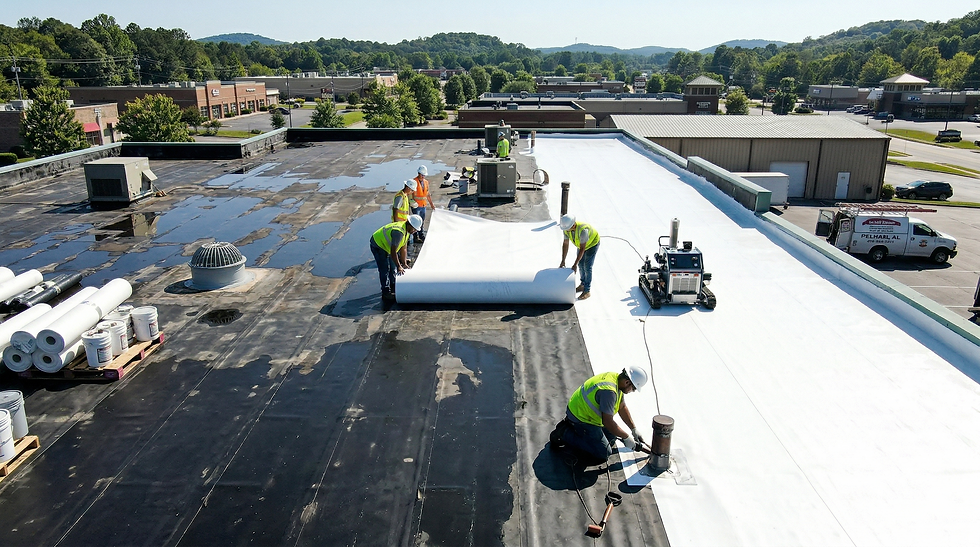
Professional Remediation vs. DIY Quick Fixes vs. Total Replacement
Temporary Patches and "Cheap Fixes"
Some facility managers attempt to "fill" low spots with asphalt roof cement, sandbags, or generic acrylic coatings. These fail. Asphalt cracks under UV; generic acrylics blister and peel under standing water; sandbags create dead load stress. These fixes rarely last a single Pelham storm season and can trap moisture, promoting rot inside the building envelope.
Full Roof Replacement
While necessary if the structural deck is severely degraded, a total tear-off is exorbitant, highly disruptive to operations, and costs 5-10 times more than restoration.
Professional Slope and Coating Restoration
A comprehensive solution addresses the root cause: drainage, slope, and membrane integrity. By isolating ponding zones, installing tapered insulation, and utilizing targeted fluid-applied restoration, you can permanently solve the drainage issue, preserve manufacturer warranties, and extend the roof’s life by 10-20 years at a fraction of the cost of replacement.
Frequently Asked Questions (FAQ)
How do siphonic drainage systems help with ponding on large flat roofs?
Unlike gravity drains, siphonic systems utilize specialized baffles that prevent air from entering the pipes. This creates a full-bore, high-velocity siphonic flow that pulls water off the roof rapidly, even during the high-volume flash thunderstorms common in Pelham.
Can elastomeric coatings solve ponding water problems?
No, coatings do not correct structural depressions. High-quality silicone coatings resist degradation under standing water, but they should only be applied after proper drainage and slope (quarter-inch per foot) have been established through tapered insulation or other engineering methods.
How often should my roof drainage system be inspected in Pelham?
Industry best practice recommends inspecting commercial roofs and cleaning drains twice per year—ideally in spring and fall—and crucially, after any major Pelham weather event to remove leaf fall and pollen before they clog drains.
